




Wettbewerb
Wettbewerb: Mein Lieblingsexponat
Sie sind gerade im Museum? Perfekt! Machen Sie Ihren Besuch zum Gewinn: Zeigen Sie uns Ihr persönliches Highlight und sichern Sie sich die Chance auf Preise im Gesamtwert von CHF 20’000.
In 3 Schritten zum Gewinn
Schritt 1
Fotografieren
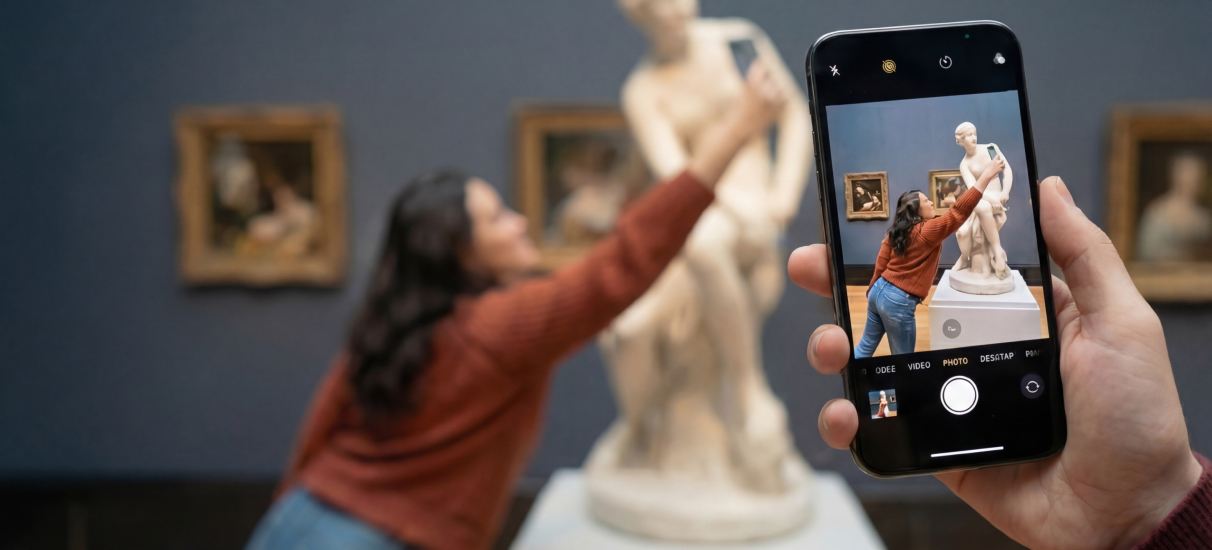
Schnappen Sie sich Ihr Handy und machen Sie ein Foto, Selfie oder kurzes Video mit einem Lieblingsexponat hier im Museum.
Schritt 2
Posten
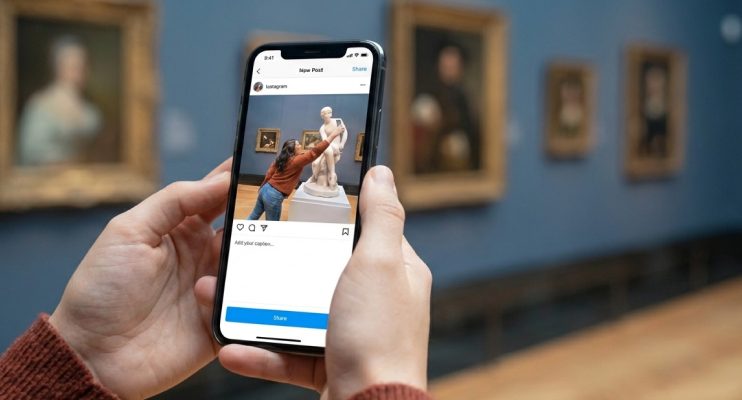
Laden Sie das Bild oder Video auf Instagram oder Tiktok hoch.
Schritt 3
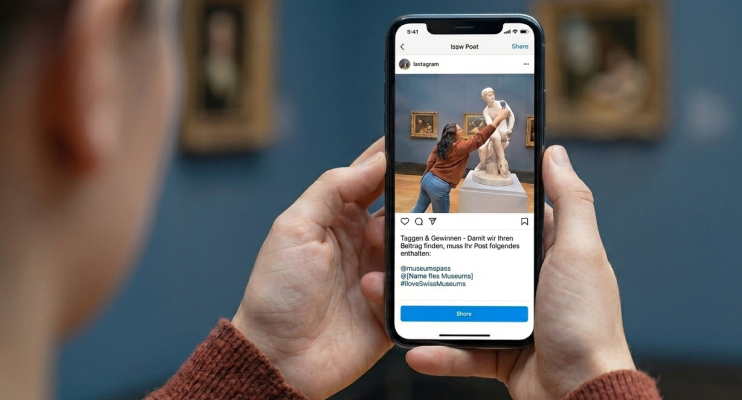
Taggen & Gewinnen
Damit wir Ihren Beitrag finden, muss Ihr Post folgendes enthalten:
@museumspass
@[Name des Museums]
#IloveSwissMuseums
Das erwartet die besten Bilder
Eine Jury prämiert die kreativsten Einsendungen.
Gesamtwert der Preise: CHF 20’000.
Preis Nr. 1
Preis Nr. 2
Preis Nr. 3
Preis Nr. 4
Preis Nr. 5
Preis Nr. 6
Preis Nr. 7
Preis Nr. 8
Wie werden die Gewinner ermittelt?
Sie brauchen keine Tausenden Follower, um zu gewinnen! Unsere Fachjury sichtet laufend die Social Wall und wählt am Ende der Laufzeit (Herbst 2026) die 20-40 besten Beiträge.
Unsere Jury achtet auf originelle Perspektiven und Ideen, gelungen Inszenierung des Exponats oder die darin enthaltene Freude an Kunst und Kultur.
So feiert die Schweiz
Live-Feed von #IloveSwissMuseums
The Pavillon de l’estampe at the Musée Jenisch is also dedicated to the exhibition “Impressions du Japon”, putting the collector Rudolf Schindler in the spotlight as well as showcasing works from thecollection that reveal more about the process of creating ukiyo-e prints. Schindler was the ...director of the Ecole d’art visuels in Biel/Bienne and became interested in Japanese prints in the 1940s. Through a network of specialists and gallerists, he amassed an astonishing collection of Japanese art over the following decades, numbering about 2500 prints. Beside his interest for Japanese art, he also collected Swiss artists, among them a large group of drawings and paintings by Ferdinand Hodler, which he also bequeathed to the Musée Jenisch in 2015. The presence of preliminary sketches for ukiyo-e in Schindler’s collection speak to how well-connected he was, as these are usually very rare in European collections. Similarly, unfinished or unsuccessful prints allow a glimpse into the way these works of art were constructed.
jenischmuseedartdevevey
museumspass
“Models for Different Hairstyles” by an anonymous Japanese artist (ca 1850-1900)
“Keisei Koibikyaku and Ninokuchi-mura” by Utagawa Hiroshige (ca 1846-51)
“Compilation of sketches of warriors in the play “Kanadehon Chūshingura” attributed to Utagawa Kuniyoshi (ca 1840-60)
“Preparatory Drawing for ‘Chinese Sage Zhang Guolang Liberating a Magic Horse from a Gourd’” by Utagawa Kunisada (ca 1820-60)
“Character Preparing to Draw his Saber from its Scabbard” by Toyohara Kunichika (ca 1850-1900)
“Preparatory Drawing for a Print of an Actor in a Female Role” attributed to Utagawa Kuniyoshi (ca 1840-60)
“Preparatory Drawing of a Fan Representing a Woman with a Flowers and Birds Background” attributed to Utagawa Kunisada (ca 1835)
“Preparatory Drawing for one of the plates from the series ‘List of the One Hundred and Eight Heroes of the Popular Suidoden’” atrributed to Yoshinobu Utagawa (ca 1827-30)
Two print versions of “Yamauba Reclingin among Rocks” by Totoya Hokkei (ca 1790-1850)
Works of inner images from C.G. Jung, his wife Emma Jung and patients
Drawings, anonymous artists from the C. G. Jung Patient Collection, ca. 1929-1959
Emma Jung, Traum- und Tagebuch, 1914/15, Familienarchiv Jung, Küsnacht
Pictorial works from May 22, 1917, anonymous artists from ...the C.G. Jung Patient Collection, 1917
C. G. Jung, wooden sculpture, ca. 1920, carved, painted; C.G. Jung associated this figure with the Germanic God Loki (unpredictable natural force) and with the Greek Hephaestos (God of fire, metallurgy and blacksmiths).
C.G. Jung: Kugelvision I, 1919 / Gouache on paper Familienarchiv Jung, Küsnacht
#cgjung landesmuseumzuerich #seelenlandschaften
#museumspass #museumandme #iloveswissmuseums
19th century Japan was connected by five major roads that had been constructed to connect the historical capital Edo with the rest of the country. The most popular of these was the Tokaido Road, which connected Edo with Kyoto along the eastern coast of Honshū. Along this road were 53 post ...stations, providing food and lodging and for Utagawa Hiroshige they provided material for one of his most successful series of prints. First created in the 1830s, he subsequently created 30 more variations on the original theme over the following decades, sometimes collaborating with other students from the Utagawa school. The series did very well and is considered a major factor in the popularisation of the landscape genre in Japan.
jenischmuseedartdevevey
museumspass
“Enshū Kites, A Famous Product of Fukuroi” by Utagawa Hiroshige (1855)
“Maisaka: View of the Sea at Imagiri” by Utagawa Hiroshige (1855)
“Ama no Hashidate in Rain and Lightning” by Utagawa Kuniyoshi (ca 1820-60)
“Ishibe: Village of Megawa” by Utagawa Hiroshige (1855)
“Kanbara: View of the Fuji River from Iwafuchi” by Utagawa Hiroshige (ca 1841-44)
“Hara: the Station of Kashiwabara” by Utagawa Hiroshige (1854)
“Hiratsuka” by Utagawa Hiroshige II (1863)
“Nihonbashi” by Utagawa Kunisada (1854)
“Sahura, Narihira and Nijō-no-Tsubone” by Utagawa Kuniyoshi (1852)
“The Graden in Snow” by Utagawa Hiroshige (1854)
[Exposition]
👀 En coulisses, le nouveau cycle d'expositions du Musée d'art du Valais prend forme...
🔹"Les grandes inspirations"
🔹Vernissage le 27 février, dès 17h
🔹Entrée libre
#museedartduvalais #museesvalais
In 2015 the Musée Jenisch in Vevey received a gift of over 2000 Japanese ukiyo-e prints, focusing on the Utagawa school, active from the late 18th until the early 20th century. They are now presenting a selection of these in the exhibition “Impressions du Japon”. The Utagawa school was founded... by Utagawa Toyoharu in the second half of the 18th century. It developed into one of the most successful schools of ukiyo-e print production under the leadership of Utagawa Toyokuni with approximately half of all ukiyo-e prints today coming from this school. As was custom in Japan, the most successful students were allowed to take the surname of their master and were also allowed to use the family crest. Hence, the majority of prints in the exhibition being by artists with the same name. The Utagawa school was very well-respected and being able to use its name opened many doors and would, for instance, allow free entry to the theatre. Unsurprisingly, many of the Utagawa prints feature scenes of Kabuki theatre and depict famous actors in their most iconic roles.
jenischmuseedartdevevey
museumspass
“The Actor Ichikawa Danjuro VIII as Rokuyata, Tamaya Shinbei, Kagekiyo and Shigehara” by Utagawa Kuniyoshi (1849)
“The Actor Bandō Hikosaburō as Ōaka, Governor of Echizen” by Toyohara Kunichika (1875)
“The Actor Nakamura Fukesuke I as Tairo Tarō Yoshikado” by Utagawa Kunisada (1859)
“Eight Bridegrooms for One Daughter” by Utagawa Kunisada (ca 1949)
“Sa Brigade, Third Group, Mita: The Actor Nakumaru Shikan I as Watanabe no Tsuna” by Utagawa Kunisada (1862)
“The Actor Nakamura Utaemon IV in Multiple Roles Presented as a Kaomise Banzuke” by Utagawa Kuniyoshi (ca 1848-50)
“Modern Girls in Full Bloom” by Utagawa Kunisada (ca 1843-47)
“Woman Outside Saruya” by Utagawa Kuniyoshi (ca 1846)
“The Great Battle of Dan-no-Ura” by Utagawa Kuniyoshi (1849-50)
“Yorimitsu Tries to Capture Hakamadare by Destroying his Magic” by Utagawa Yoshitsuya (1858
Here are ten more pictures from the exhibition showcasing the Armand Hammer Collection at the Fondation Pierre Gianadda in Martigny. Unfortunately the exhibition closed in December and I am very late in posting.
fondationpierregianadda
museumspass
hammer_museum
“Le Roi ...David” by Gustave Moreau (1878)
Detail of “Le Roi David” by Gustave Moreau (1978)
“Vue de Bordighera” by Claude Monet (1884)
“Le Jardin du presbytère à Nuenen” by Vincent van Gogh (1885)
“Le Repos de paysans” by Jean-François Millet (ca 1866)
“Salomé dansant devant Hérode” by Gustave Moreau (1974-76)
“Pivoines dans un vase bleu et blanc” by Henri Fantin-Latour (1872)
“Portrait d’un homme tenant un chapeau noir” by Rembrandt van Rijn (ca 1639-40)
“Junon” by Rembrandt van Rijn (ca 1662-65)
“Portrait d’Alice Legouvé” by Édouard Manet (1875)
✨ SAVE THE DATE – INAUGURAZIONE✨
🗓️Sabato 14 marzo 2026, ore 17:00
𝙳𝚊𝚗𝚒𝚎𝚕𝚎 𝙱𝚞𝚣𝚣𝚒. 𝙳𝚒𝚙𝚒𝚗𝚝𝚒 𝚎 𝚖𝚊𝚗𝚒𝚏𝚎𝚜𝚝𝚒
15.03 – 28.06.2026
Questa mostra offre l’occasione di riscoprire... Daniele Buzzi (1890-1974), figura rilevante della storia artistica e culturale del Locarnese. A oltre quarant’anni dall’ultima grande antologica a Casa Rusca, l’esposizione propone una nuova rilettura critica della sua opera, frutto di un’approfondita ricerca e arricchita da numerosi lavori inediti.
A cura di Veronica Provenzale e Matteo Bianchi
Vi aspettiamo! 🌄
#SaveTheDate #Vernissage #DanieleBuzzi #Locarno
nancylunghi
sebastiano_peters
veronicaprovenzale
alessia_bott
giadamuto1986
valeria_malossa
locarnocity
A map photographed in the exhibition Landscapes of the soul. Lina Känzig seems to have been a patient in a Swiss psychiatric clinic. As this work is now in the psychiatrie_museum_bern. Her handwriting puts her into the generation of my grandparents. This is pretty much my corner or Switzerland she... depicted. Stekborn = Steckborn the place I went to school and started to work. Zürich the place I work now. And WiNTERTuR = Winterthur where I live. If you look closer you find friendly ghostly human beings.
Lina Känzig: Landkarte / Map
Pencil and coloured pencil on paper
Psychiatrie-Museum Bern
landesmuseumzuerich #seelenlandschaften #womanartist #museumspass #museumandme #iloveswissmuseums
From June until December last year, the Fondation Pierre Gianadda in Martigny hosted a selection of highlights from the Hammer Museum in Los Angeles. The collection was created by Armand Hammer and his brother Victor Hammer. The exhibition text abbreviates Hammer’s biography drastically, implying... by omission that Hammer’s most important achievement is the establishment of the Hammer Gallery in New York. I highly suggest reading through this man’s Wikipedia article, considering the amount of insane things he has done; from international money-laundering schemes to alleged manslaughter in a botched abortion, the bribing of Lenin for exclusive trade agreements with the Soviet Union, the sale of counterfeit Fabergé eggs, involvement in the oil trade with Muammar Gaddafi to the illegal support of Nixon’s Watergate fund. Like so many art collections, the collector of the Hammer collection is hardly an aspirational figure.
fondationpierregianadda
museumspass
hammer_museum
“Touc, assis sur une table” by Henri de Toulouse-Lautrec (ca 1879-81)
“Portrait du cardinal Sebastiano Martinelli” by Thomas Eakins (1902)
“Portrait d’un homme distingué” attributed to Théodore Géricault (ca 1810-20)
“Son Quichotte et Sancho Pança” by Honoré Daumier (1866-68)
“Portrait de Mlle Edith Crowe” by Henri Fantin-Latour (1874)
“Portrait de Sarah Bernhardt” by Alfred Stevens (1885)
“La Loge du théâtre” by Edgar Degas (1885)
“L’hôpital à Saint-Rémy” by Vincent van Gogh (1889)
“Bonjour Monsieur Gauguin” by Paul Gauguin (1889)
“Boulevard Montmartre, Mardi gras” by Camille Pissarro (1897)
Jubiläumsrabatt zum 30. Geburtstag des Schweizer Museumspasses
Seit 30 Jahren öffnen wir Türen. Feiern Sie mit uns erhalten Sie dabei CHF 30 Rabatt auf jeden neuen Museumspass.
